Unicorns, glitter, rainbows, and big colourful imaginations – there’s something undeniably joyful about the magical world of unicorns. For kids, unicorns represent wonder, fun, and the freedom to be whoever they want to be. And what better way to enjoy all that sparkly energy than through music?
Whether you’re planning a unicorn-themed birthday party, putting together a fun classroom playlist, or just want a little extra magic during the day, unicorn songs are a hit with children everywhere. Packed with catchy tunes, cheeky lyrics, and energetic beats, these songs encourage kids to sing, dance, dress up, and let their imaginations run wild.
And the best part? Unicorn songs are for everyone – boys, girls, and anyone who loves music, silliness, and sparkle.
Here’s our list of the top 10 unicorn songs for kids, featuring magical music from Australia and around the world. From calm and melodic to high-energy dance tracks, there’s something here for every little unicorn fan.
Unicorn songs offer kids a chance to be playful, creative, and just plain silly. Whether they’re galloping around the lounge room, wearing unicorn headbands, or drawing their own sparkly creatures, music helps bring their make-believe worlds to life.
These songs can turn a regular afternoon into a magical dance party. They help children express themselves, get moving, and have a laugh—important things for growing bodies and minds.
So grab your glitter, pop on your best rainbow socks, and hit play on some unicorn tunes. Whether you’re into sparkly pop or bouncy sing-alongs, there’s a unicorn song out there with your name on it.
🦄 Let the sparkle begin – happy listening, happy dancing, and may your days be filled with unicorn magic and music!
Larrikin Puppets’ engaging and interactive Puppetry Workshop for Schools is more than just a fun incursion – it’s a powerful educational experience aligned with the Australian Curriculum in both the Arts and English learning areas. Our workshop caters to students from Foundation through to Year 12 and supports the development of key skills in creative expression, performance, literacy, collaboration and confidence.
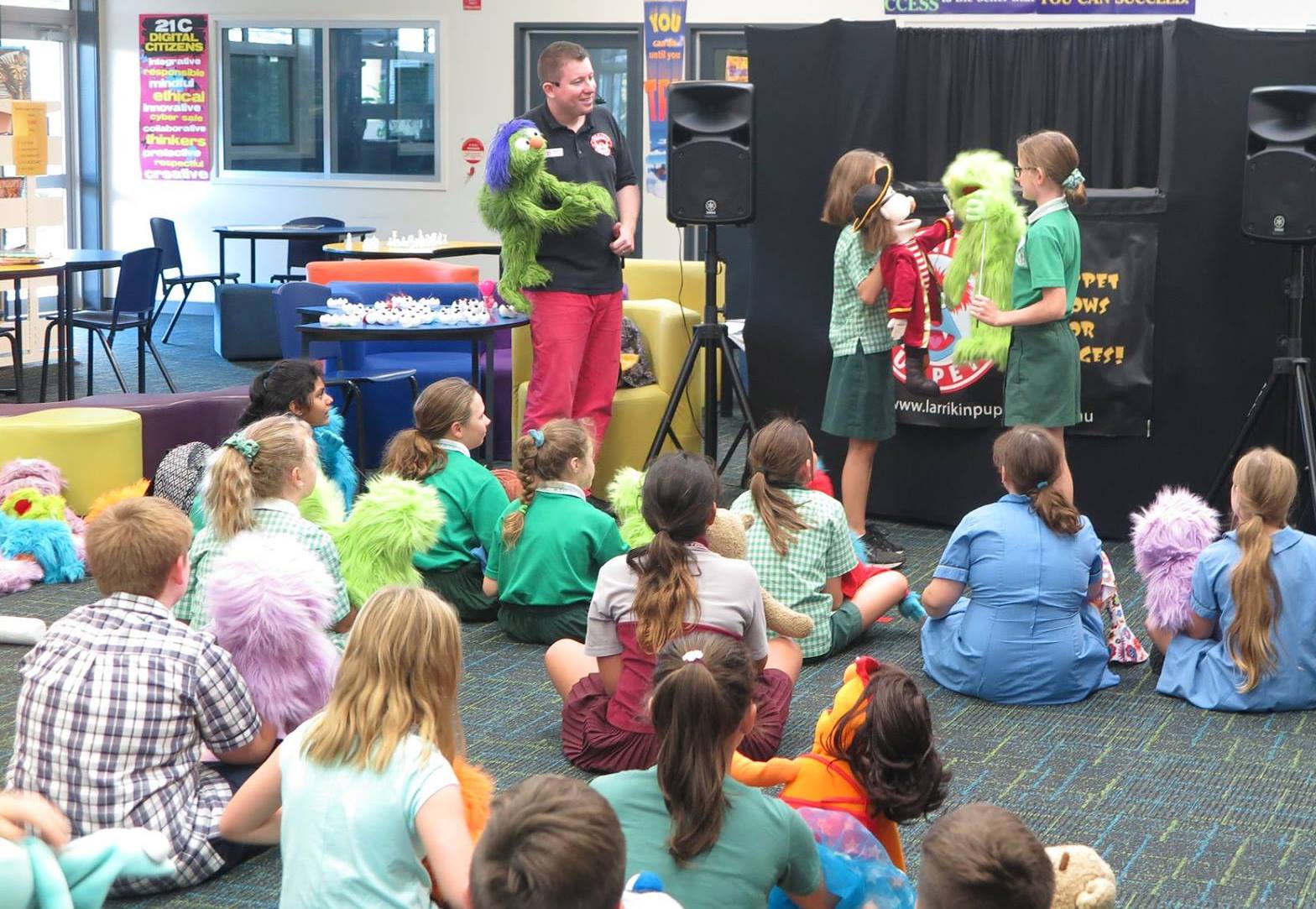
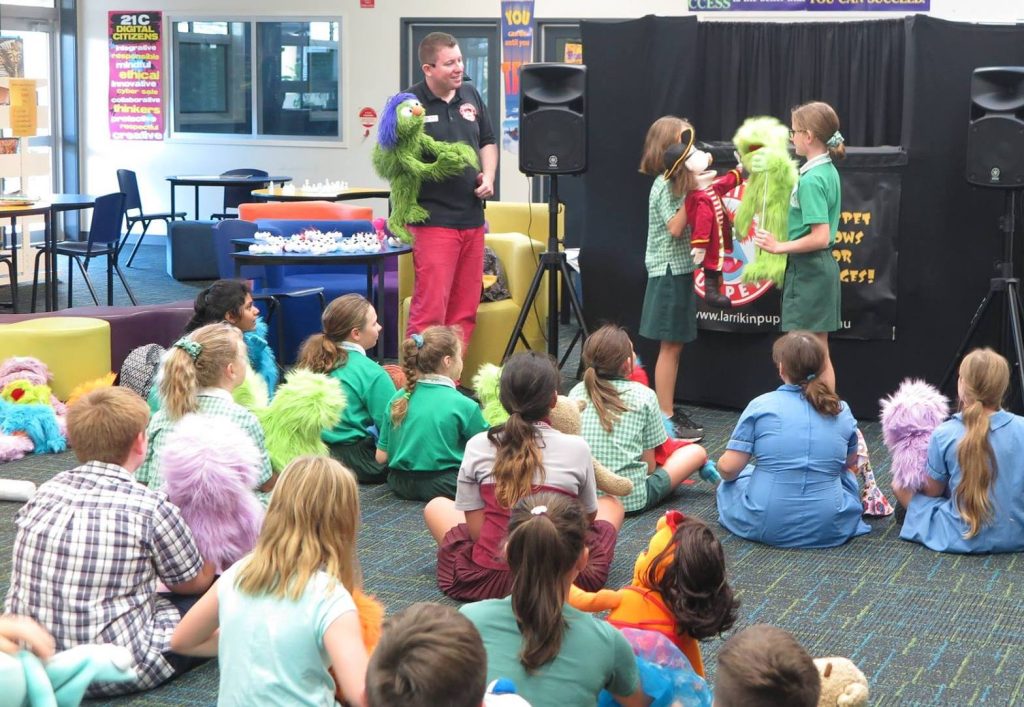
Led by professional puppeteers Brett Hansen and Elissa Jenkins, students explore Muppet-style puppetry using 50 professional puppets and special “hand eyes” in a hands-on learning environment. Students learn lip sync, eye focus, walking, arm movement, character voices and emotional expression – culminating in an opportunity to perform on stage.
Below is a breakdown of how our workshop aligns with the curriculum at different schooling levels.
Foundation – Year 2: Exploring Expression and Oral Language
Curriculum Links:
• Drama: Students are introduced to role and dramatic action, using voice and movement to explore characters and situations (ACADRM027).
• English: Students engage in oral language activities, developing listening and speaking skills, including storytelling and performance (ACELY1656, ACELY1660).
Workshop Benefits:
At this level, our puppetry workshop helps young learners express emotions and ideas through character play. Manipulating puppets allows students to explore dramatic roles in a safe and imaginative way. The puppet becomes a playful intermediary, helping shy students gain confidence while developing verbal expression. The physicality of puppetry also supports gross motor skills and coordination, while the interactive performance encourages listening, turn-taking, and group collaboration.
Years 3–6: Developing Character and Communication Skills
Curriculum Links:
• Drama: Students develop skills in improvisation, characterisation, and the use of performance elements like voice, movement and space (ACADRM033, ACADRM036).
• English: Students refine their speaking and listening skills, understand dialogue in texts, and use performance to share stories (ACELY1689, ACELY1692).
Workshop Benefits:
Puppetry encourages older primary students to create characters and short narratives using visual storytelling and vocal techniques. They learn how to synchronise speech with movement (lip sync), and how eye focus can communicate emotion and intention. This aligns with both the Arts and English curriculum goals of interpreting and performing text. By creating and performing their own scenes, students build empathy, narrative skills, and presentation confidence.
Years 8–10: Refining Performance and Analytical Skills
Curriculum Links:
• Drama: Students explore dramatic forms, refine expressive skills and reflect on performance (ACADRM040, ACADRM044).
• English: Students engage with multimodal texts, evaluate spoken language, and craft presentations for specific audiences (ACELY1810, ACELY1813).
Workshop Benefits:
For high school students in Years 8–10, our puppetry workshop supports more sophisticated storytelling and performance analysis. Students are encouraged to critically reflect on performance elements, collaborate on short scenes, and consider audience engagement. Puppetry also introduces them to career pathways in performance, voiceover, or film production. The workshop builds key transferrable skills in communication, improvisation and media literacy, while encouraging self-expression and resilience through creative risk-taking.
Years 11–12: Exploring Advanced Technique and Theatre Styles
Curriculum Links:
• Drama (Senior): Students analyse contemporary theatre practices, apply dramatic conventions, and develop performances for live audiences (Queensland Curriculum and Assessment Authority – Senior Drama Syllabus).
• English: Students compose and deliver presentations, understand stylistic features, and reflect on purpose and audience (Unit 3 & 4, English General).
Workshop Benefits:
At senior levels, our workshop offers a professional-level experience in puppetry as a specialised performance art. Students gain insight into contemporary puppetry techniques used in theatre, film and television. They experiment with non-verbal storytelling, character development, and ensemble performance. The workshop also deepens their understanding of symbolism, metaphor and subtext through the medium of puppet theatre. This aligns closely with curriculum outcomes in devising and evaluating drama, oral communication, and multi-modal storytelling.
Why Puppetry Matters in Education
Beyond the curriculum, puppetry is a proven tool in education for enhancing student engagement and wellbeing. According to educational research, puppetry fosters creativity, boosts self-esteem, and improves verbal and non-verbal communication. It creates an inclusive environment where all students – regardless of ability – can participate and succeed. The collaborative nature of puppetry also encourages teamwork, empathy, and emotional intelligence.
Whether students are taking their first steps in performance or refining their craft for senior assessment, our Puppetry Workshop for Schools supports deep and meaningful learning through play, performance, and creativity.
Interested in booking a curriculum-aligned puppetry workshop at your school?
Contact us to learn more about our Puppet Performance Workshops as a school incursion across Queensland and beyond.